
Why "Extra Money" Means Something Different in Every Province
A GPT (get-paid-to) platform tells you that members earn "$150 a month" from surveys, games, offers, and cashback. That number sounds identical whether you live in Calgary or Charlottetown — but it isn't. $150 covers a meaningfully bigger slice of your monthly costs in Moncton than it does in Vancouver, because rent, groceries, and hourly wages don't move together across the country.
That's the gap most GPT marketing ignores. Judging GPT side income by province Canada requires two numbers most sites skip: the local minimum wage floor and the local cost of living. Put those together and a flat dollar figure turns into something you can actually evaluate — is this side income meaningful where I live, or is it background noise? This piece builds that framework, province by province, so you can set a target that reflects your own reality instead of someone else's screenshot.
Minimum Wage Across Canada in 2026: The Starting Benchmark
Minimum wage is the simplest anchor for judging any side income, because it converts your time into a dollar figure regulators consider a baseline. When you compare GPT earnings to minimum wage per hour worked — not just to a lump monthly total — you get an honest read on whether the effort is worth it.
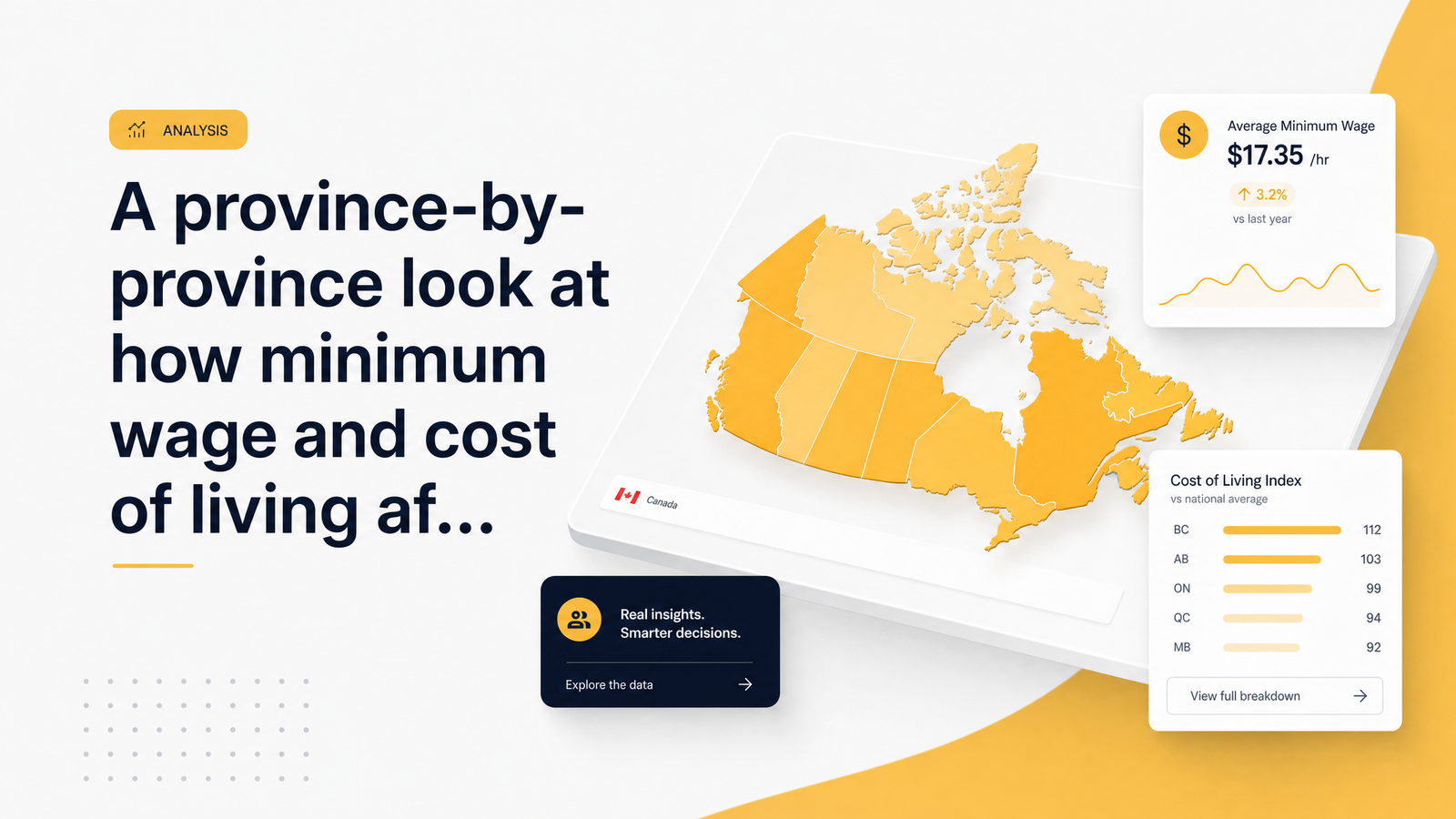
The provincial minimum wage comparison for 2026 looks like this, according to Workforce.com's minimum wage tracker and confirmed increase dates from Littler's 2026 minimum wage roundup:
- Alberta: $15.00/hour — the lowest among the provinces
- British Columbia: $18.25/hour
- Ontario: $17.95/hour, effective October 2026
- Quebec: $16.60/hour, effective May 2026
- Nova Scotia: among the more modest Atlantic rates, trailing BC and Ontario
- Federal rate (for federally regulated industries): $18.15/hour
That's more than a $3/hour spread between Alberta and BC — over 20% of the lower figure. If your GPT earnings work out to roughly $2/hour of effort, that's a much bigger relative boost against a $15.00 floor than against an $18.25 one. Minimum wage by province Canada 2026 isn't just a labour statistic; it's the yardstick that tells you whether your side income is closing a real gap or barely registering.
Cost of Living Swings the Real Value of Every Dollar
Wages are only half the equation. The other half is what a dollar actually buys once it lands in your account. Cost of living by province Canada varies enormously, and rent by province Canada drives most of that gap.
British Columbia and Ontario consistently rank as the most expensive provinces to live in, largely due to housing costs in Vancouver and Toronto, according to Spergel's 2026 cost-of-living breakdown and Neobanc's province-by-province cost guide. Rent in these markets can run well above what a comparable unit costs in Manitoba, Saskatchewan, or most of Atlantic Canada. Atlantic Canada and the Prairie provinces are generally more affordable, with lower average rents and grocery costs offsetting somewhat lower average wages.
This is why the same $150 GPT payout stretches differently depending on your postal code. In a lower-cost province, that amount might cover a substantial grocery run and part of a utility bill. In Toronto or Vancouver, it might barely dent one month's rent increase or a single larger grocery trip for a family. None of this means GPT income is worthless in expensive provinces — it means the bar for "meaningful" needs to be recalibrated against local prices, not a national average.
What Counts as "Meaningful" GPT Income Where You Live
Once you have a wage floor and a cost-of-living picture, you can build a real framework instead of guessing. Typical GPT earnings — the mechanics of which are covered in detail in our breakdown of survey earnings in Canada — tend to land in a modest but real monthly range for consistent, moderate effort. The question isn't whether that range is impressive in isolation; it's whether it measurably offsets something you'd otherwise pay for out of pocket.
Try measuring GPT earnings vs cost of living using concrete, local benchmarks instead of abstract totals:
In higher-cost provinces (BC, Ontario): A representative grocery run for one or two people, or a chunk of a monthly hydro or gas bill, is a realistic target for GPT income to fully or mostly cover. Expecting it to meaningfully dent rent is optimistic — but expecting it to erase a weekly grocery bill or cover a phone plan is reasonable.
In more moderate-cost provinces (Alberta, Prairies): The same GPT income goes further — potentially covering groceries for a week plus a utility bill, or a tank of gas plus a chunk of a phone bill, since both rent and daily costs sit lower relative to the minimum wage floor.
In Atlantic Canada: Lower average rents mean GPT income can realistically cover a bigger share of monthly discretionary spending — a full grocery week, a streaming bundle, and a utility payment combined, rather than just one of those line items.
Is GPT side income worth it? The honest answer is: it depends on what you're measuring it against. As a replacement for a job, no — nobody positions it that way. As a way to fully or partially cover one or two recurring bills each month, in most provinces, yes — provided your expectations are scaled to local prices rather than borrowed from a testimonial written in a different province. For a broader sense of how GPT fits into online earning generally, this overview of making money online in Canada is a useful starting point if you're new to the concept.
Setting a Realistic Province-Adjusted GPT Income Goal
A useful side income goal Canada-wide isn't one number — it's a personal calculation using two inputs you now have: your province's minimum wage and your own recurring costs.
Start with the wage floor. If your province's minimum wage is $15.00 (Alberta) versus $18.25 (BC), your GPT effort is worth relatively more per hour in the lower-wage province, all else equal — the same $20 evening session represents a bigger fraction of an hour's minimum-wage pay. Use that to set expectations for how many hours of GPT activity make sense for you before diminishing returns set in.
Next, anchor your target to one or two specific bills rather than a vague "extra cash" goal. Decide: is this month's GPT income supposed to cover my internet bill? Half my groceries? A tank of gas? Naming the target makes it measurable and keeps you from either overestimating GPT's impact or dismissing it because it didn't replace your job.
Finally, consider stacking GPT offers and cashback rather than relying on one earning type. Surveys alone have natural ceilings, but combining surveys, offer walls, games, and cashback from regular purchases raises your realistic monthly ceiling without dramatically increasing time spent. If your province-adjusted target is still out of reach through GPT activity alone, pairing it with a lightweight side hustle can close the gap — this effort-based guide to Canadian side hustles breaks down options by time investment.
If you're weighing whether to commit real time to a platform at all, it's worth reading an honest, evidence-based look at platform legitimacy — this review of CashSprint walks through exactly that.
Frequently Asked Questions
Does minimum wage in my province affect how much I should expect from GPT apps?
Yes — minimum wage sets the baseline for judging whether your time is well spent. In a lower-wage province like Alberta ($15.00/hour), a given GPT payout represents a larger share of an hour's minimum-wage earnings than the same payout in British Columbia ($18.25/hour), so the relative value of your effort shifts by province even when the dollar amount doesn't.
Is $100–$200 a month from surveys and offers actually worth it in a high-cost province like Ontario or BC?
It can be, if you measure it against a specific cost rather than rent or overall living expenses. In Ontario or BC, $100–$200 is more realistically framed as covering a grocery run or a utility bill than as a dent in housing costs, which are the dominant expense driving those provinces' higher cost of living.
Which Canadian provinces get the most value out of GPT side income?
Atlantic Canada and the Prairie provinces generally get the most relative value, since lower average rents and living costs mean the same GPT income covers a larger share of monthly expenses. BC and Ontario, with the highest average living costs, require larger GPT earnings to achieve the same relative impact.
How much do Canadians typically earn from GPT platforms like CashSprint in a month?
Monthly totals vary widely based on time invested, platform mix, and how many offers, surveys, and cashback opportunities someone stacks. Our detailed breakdown of survey earnings in Canada covers realistic ranges and what drives them without relying on flat, one-size-fits-all figures.
Should I compare my GPT earnings to minimum wage per hour or to my monthly bills?
Both, for different purposes. Compare to minimum wage per hour to judge whether your time is being used efficiently, and compare to specific monthly bills — groceries, utilities, a phone plan — to judge whether the income is meaningfully offsetting real costs where you live.
Does cost of living matter more than minimum wage when judging side income?
Both matter, but they answer different questions. Minimum wage tells you the relative value of your time; cost of living tells you the relative value of the dollars you earn, since the same amount buys noticeably more in Atlantic Canada or the Prairies than in BC or Ontario.
Run your own gut-check: does your current GPT income cover one grocery run, one utility bill, or a full week's groceries where you actually live? If it doesn't yet, Cashsprint lets you stack surveys, games, offers, and cashback toward a target that fits your province — sign up or log in and see what a province-adjusted goal looks like for you.