
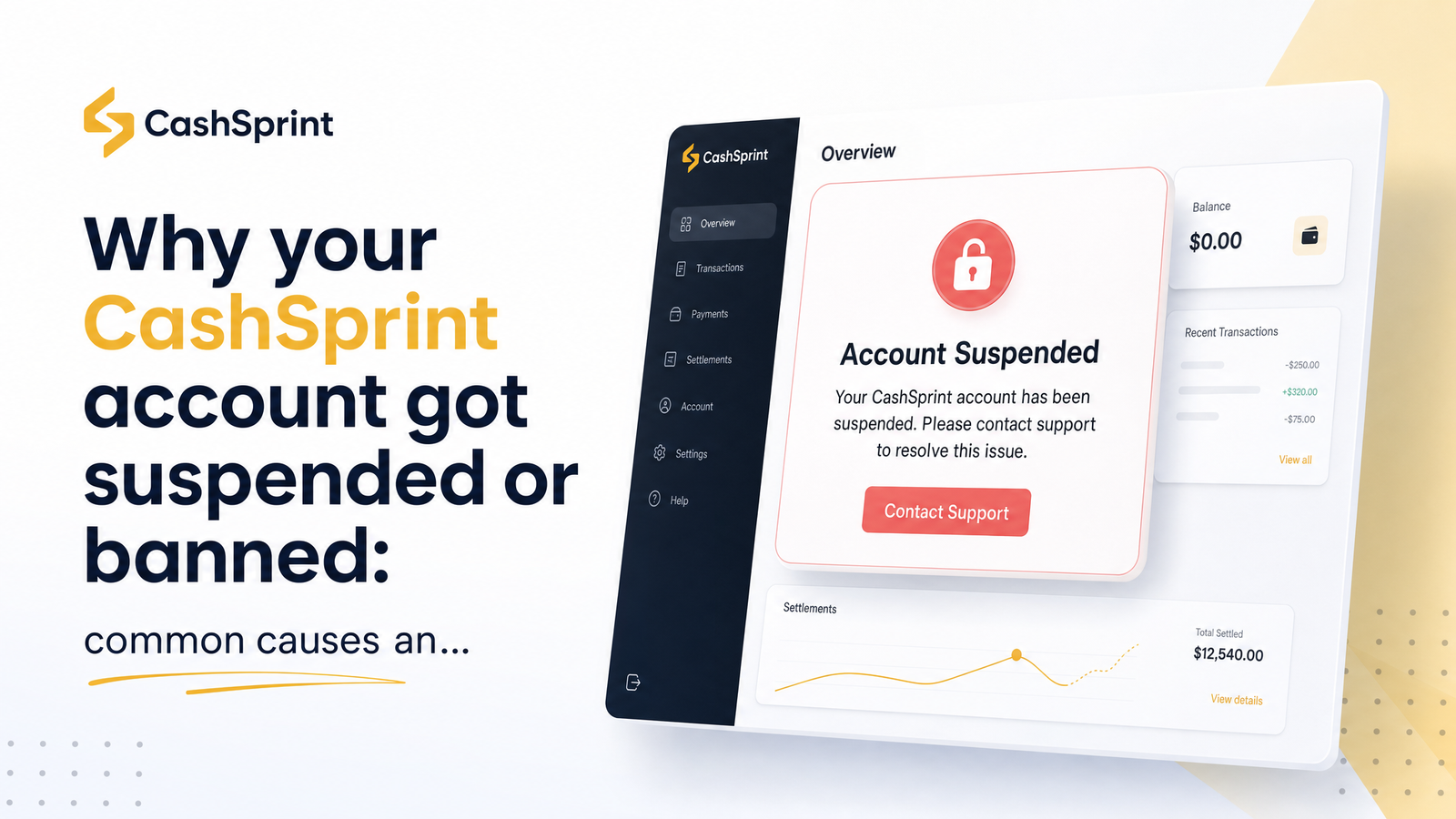
Getting a notice that your CashSprint account is suspended is unsettling, especially if you've got points, cashback, or a payout sitting in your balance. The good news: a suspension is a checkpoint, not a verdict. Most suspensions are triggered automatically by fraud-prevention systems protecting the reward pool that pays honest Canadian members — not by a human deciding you've done something wrong. This article explains what actually trips those systems, what happens to your money during review, and how to write an appeal that gets resolved.
What a CashSprint Suspension Actually Means
A suspension is a temporary hold, not automatically a permanent ban. When your CashSprint account is suspended, it usually means an automated system flagged an inconsistency — duplicate device signals, a mismatch in ID or banking details, or unusual survey and offer-wall activity — and paused the account so a reviewer can look before any further payouts go out.
"Under review" means CashSprint hasn't concluded anything yet; it's holding the account still while verifying whether the activity was legitimate. A permanent ban is a separate, final outcome that follows confirmed policy violations or, more often, a poorly handled appeal (more below).
Think of it like a bank flagging a transaction: the system errs on caution because reversing a mistaken suspension is easy, but paying out on confirmed fraud isn't. That caution protects the reward pool that funds every legitimate payout — including yours. If the suspension has shaken your confidence in CashSprint generally, that broader question is answered in Is Cashsprint Legit? A Skeptic's Evidence-Based Review.
The Most Common Causes of Suspension for Canadian Users
Most CashSprint account banned notices trace back to one of a handful of verifiable triggers.
Multiple accounts. GPT platforms rely on a one-account-per-person rule, and CashSprint's fraud detection cross-references names, addresses, devices, and payment methods to catch duplicates. Multiple accounts GPT abuse is the single most common cause of suspension, including cases you might not expect: a spouse or roommate signing up on the same home Wi-Fi, or someone reusing a payment method (the same Interac email or PayPal address) across two profiles.
VPN or proxy use. A VPN survey site ban is common across the GPT industry. Survey and offer partners pay based on geographic targeting, so anything masking your real location — including "free" VPN and proxy browser extensions — triggers a location-mismatch flag. Canadian users on a VPN "for privacy" while browsing offers are frequently caught in this net without intending anything dishonest.
Mismatched ID or banking details during verification. If the name, address, or banking information you submit doesn't match your government ID or a bank verification step, the system holds the account rather than risk paying the wrong person.
Quality-flagged survey answers. Rushed completions, contradictory answers across screening questions, or straight-lining get flagged by survey partners before the data reaches CashSprint, and repeated flags accumulate into a review trigger.
Disputed or reversed offer-wall credits. An offer wall reversed credit happens when the advertiser behind an offer determines the action (an app install, a trial signup) wasn't completed as required, or was reversed after a chargeback. CashSprint doesn't control this; it's the advertiser's call, and it can retroactively pull credit already posted to your balance.
Referral program abuse. Signing up your own alternate accounts as "referrals," or using bots/click farms to inflate referral counts, is treated the same as multi-accounting.
Some of these — like inconsistent survey answers — are avoidable with better habits, covered in detail in Online Survey Mistakes Costing Canadians Real Cash.
What Happens to Your Balance and Pending Cash Out
Your balance is frozen, not erased. A frozen balance on a GPT account means the funds stay on the ledger exactly where they were when review started; they aren't deducted simply because the account is under review.
If a payout was already in motion, CashSprint payout suspended cases work the same way: an Interac e-Transfer, PayPal transfer, or gift card redemption initiated before the flag is typically paused rather than reversed, but new cash-outs won't process while under review. That's a deliberate safeguard — releasing funds mid-review, only to discover fraud afterward, would hurt the pool that pays everyone else.
What CashSprint can't promise is a guaranteed outcome. If the review confirms a genuine violation — a second account, falsified ID, or confirmed offer-wall fraud — the balance tied to that violation may be forfeited as part of the resolution. That's why the appeal step matters: it's your chance to demonstrate the activity was legitimate before any final decision locks in.
How to Appeal a CashSprint Suspension: Step-by-Step
An effective appeal to CashSprint account suspended issues follows a specific sequence. Skipping steps or reacting emotionally is the most common reason appeals stall.
- Find the suspension notice. Locate the original email or in-app message. It usually contains a case reference number or timestamp — useful for support to pull up your file quickly.
- Gather your evidence before contacting anyone: a clear photo of your government ID matching the name on your account, a screenshot of your bank verification confirmation (with account holder name visible), and any confirmation emails from offer walls showing completed actions, especially offers now showing as reversed.
- Write one calm, factual message. Contact CashSprint support directly — via the in-app support form or the channel listed in your suspension notice — and stick to facts: account email, case number, a short explanation, and evidence attached. Avoid speculating about why you think you were flagged; let the evidence speak.
- A short appeal script to adapt:
"Hello, my account [email] was suspended on [date] under case [number, if provided]. I believe this was flagged in error. I'm attaching my government ID, a screenshot of my bank verification, and confirmation of the offer completion in question. I have one CashSprint account and haven't used a VPN or proxy while accessing the platform. Please let me know what additional information would help resolve this."
- Don't open a second account while you wait. A second account submitted mid-appeal is read by the fraud system as confirmation of exactly what it suspected.
- Follow up on a reasonable timeline. Give the first response 5–7 business days before a polite follow-up referencing your case number. Appeals involving bank or ID mismatches can take longer if manual verification is required.
Mistakes That Make Reinstatement Less Likely
A temporary suspension turns into a CashSprint permanent ban far more often because of what happens after the flag than because of the original trigger.
Opening a second account is the biggest one. A second account suspended almost immediately after creation — often within minutes, since the same device fingerprint or household network flags it instantly — hardens the review team's read on the original account too, since it now looks like an attempt to route around a fraud check rather than resolve one.
Other reinstatement killers: sending angry, vague, or repeated identical appeal messages (this reads as pressure tactics rather than evidence, and clogs the review queue); submitting ID or banking details that don't match what you gave at signup, even by a small spelling or address discrepancy; and escalating publicly on social media instead of through the support channel, which rarely speeds anything up and can complicate the paper trail reviewers rely on.
The pattern is the same throughout: anything that looks like evasion or inconsistency gets read — by the automated system, and often a human reviewer too — as confirmation of the original flag rather than a challenge to it.
How to Avoid Getting Flagged Again
Prevention is simpler than the review process itself. Keep one account per person and per household — if a family member also wants to use CashSprint, that's fine, but each person needs their own separate device history and payment details where possible. Avoid VPNs, proxies, or "location changer" browser extensions while browsing or completing offers, even if you use them elsewhere for privacy; digital fingerprinting picks up far more than IP address alone, including browser and device signals a VPN doesn't mask.
Answer surveys at a natural, unhurried pace and keep responses internally consistent across screening questions — quality flags accumulate quietly and rarely trigger a review from a single incident, but repeated flags do. Keep your legal name, address, and banking details identical everywhere you enter them on the platform; a typo you'd never notice is exactly the kind of mismatch that trips a verification check.
For a deeper look at CashSprint's verification and payout systems, the legitimacy review linked earlier is a useful reference, and the survey-mistakes guide is worth bookmarking if quality flags are a recurring issue for your account.
Frequently Asked Questions
How long does a CashSprint account suspension usually last?
There's no fixed universal timeline — it depends on how complex the review is. Straightforward cases (a single mismatched detail) can resolve within days of a complete appeal; cases requiring manual ID or bank re-verification take longer. Following the appeal steps above and responding promptly to follow-up requests is the biggest factor in speeding it up.
Will I lose my cashback or points if my account is suspended?
Not automatically. Your balance is frozen during review, not deducted, and remains intact unless the review confirms an actual policy violation tied to specific transactions. Legitimate activity unrelated to the flag is generally preserved.
Can I just make a new CashSprint account if mine gets banned?
No — this almost always makes things worse. New accounts are checked against the same device, household, and payment-method signals that flagged the original one, so a second account is typically suspended quickly and can harden the review outcome on your original account.
Does using a VPN automatically get my account flagged?
Not automatically, but it's a common contributing factor. VPNs and proxies can mask or misrepresent your location, conflicting with the geo-targeting rules survey and offer partners rely on, making VPN use one of the more frequent triggers among Canadian users specifically.
Why was my account suspended right before a payout?
Payout requests trigger an additional verification pass, since that's the point where fraud checks matter most. A suspension appearing right before a cash-out is often coincidental timing rather than a punitive response to the payout itself — it's simply when the system does its closest review.
Who do I contact to appeal a suspension on CashSprint?
Use the support channel referenced in your suspension email or the in-app support/contact form — that's the fastest path, since it's tied directly to your case file. Include your account email, case number if available, and the evidence described in the appeal steps above.
If your CashSprint account is suspended right now, don't wait it out passively — submit an appeal through CashSprint's support channel using the script above, attaching your ID and bank verification evidence up front. Before you resubmit anything, it's worth reviewing the ID and bank verification steps on Cashsprint so the root cause — not just the symptom — gets fixed, which is what actually prevents a repeat suspension down the line.