
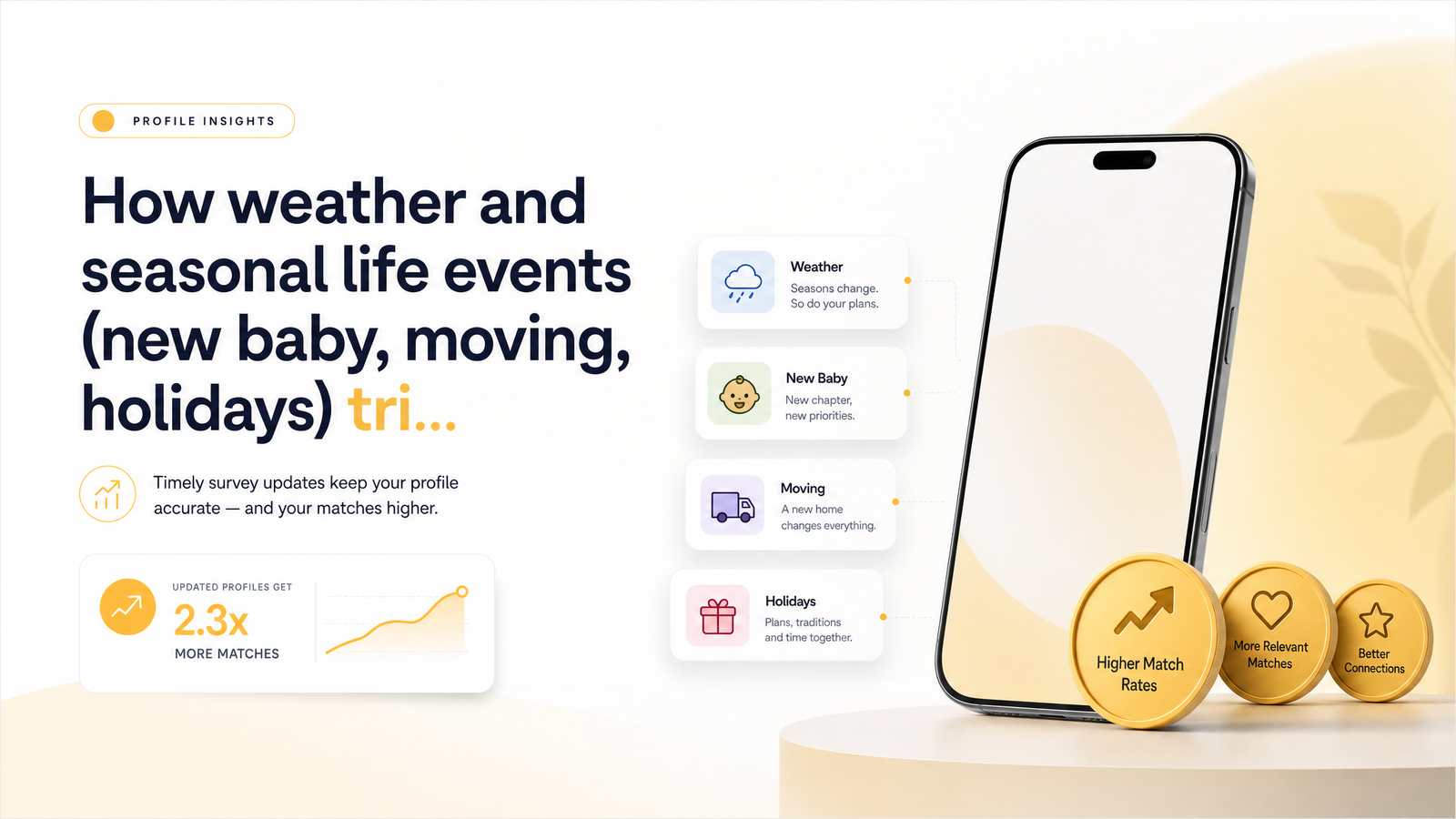
Why Your Survey Matches Change Without Warning
One month your CashSprint dashboard is full of paid offers. The next, invitations slow to a trickle and you're left wondering, "why am I not qualifying for surveys anymore?" The honest answer is rarely a glitch or a penalty — it's that your profile stopped matching what advertisers are currently buying.
Most people treat their GPT profile like a form they filled out once at signup and never touch again. Market research panels don't work that way. They continuously re-weight who they need based on shifting client demand, and a profile that was perfectly matched six months ago can quietly go stale. That's the core idea behind survey profile updates in Canada: your data needs to reflect your current household, location, and life stage, not the one you had when you registered. Treat it as light maintenance, a few minutes every season or after anything major changes, and the qualifying-question drop-offs that usually kill your earning momentum happen far less often.
Life Events That Should Trigger a Profile Update
Advertisers commission research to reach people at specific moments — not generic demographics. When your circumstances shift, you move in and out of the exact quotas panels are trying to fill. A few triggers matter more than others:
- New baby. A survey profile update after a new baby is one of the highest-value changes you can make. Baby product, insurance, and household-budget studies actively hunt for new and expecting parents, and quota sampling for this group fills quickly — panels want to hear from you while the data is fresh.
- Moving. Updating your GPT profile after moving changes your postal code targeting, which affects everything from regional retail studies to local political or municipal surveys. Postal code data also ties into household composition and income-bracket assumptions, so even a move across town is worth logging.
- New job or income change. Employment status and income bracket feed directly into B2B research, workplace-benefits studies, and financial-product surveys. A promotion, a layoff, or a switch to self-employment all reshape which offers you're eligible for.
- New vehicle. Auto insurance, dealership satisfaction, and fuel-brand studies filter almost entirely on vehicle ownership, make, and age. An outdated "no vehicle" or wrong-model entry silently excludes you from a whole offer category.
- Relationship status change. Marital and household status affects everything from financial planning research to grocery and travel studies built around household size.
Each of these connects back to the same mechanic: GPT profile matching in Canada runs on current-state data, and panels can't guess that your life changed unless you tell them.
How Weather and Seasonal Cycles Shift What You Get Matched To
Life events aren't the only trigger. Seasonal survey offers in Canada follow the retail and weather calendar just as closely as they follow personal milestones. Winter gear studies peak in October and November, back-to-school research floods in during July and August, and holiday retail surveys — gift spending, travel plans, seasonal food — dominate from mid-November through December. Once a season's ad campaigns wrap, that demand disappears almost overnight, which is why your match volume can dip sharply in January or after Labour Day even though nothing about your profile actually changed.
So yes, surveys do change with the seasons, and it's worth keeping purchase-intent and household fields current heading into each cycle so you're positioned for whatever category is buying quota that month. We cover the seasonal calendar in more depth, including which months tend to be strongest for which categories, in our companion piece on demand cycles — worth a read if you want to plan around it rather than just react to it.
What to Actually Update in Your CashSprint Profile
Not every field carries equal weight in matching. Some are decorative; others are the exact levers advertisers filter on. If you're asking how to qualify for more surveys in Canada, start with this checklist and revisit it after any trigger above:
- Household composition — number of adults, children, and their ages. This is one of the most heavily used fields in quota sampling, especially for parenting, grocery, and insurance studies.
- Address and postal code — drives regional targeting and is tied to Statistics Canada census data that panels use to fill geographic quotas accurately.
- Employment status and industry — updates your eligibility for workplace, financial, and B2B research.
- Vehicle ownership and type — controls access to the entire automotive and insurance survey category.
- Purchase intent fields — anything you're planning to buy in the next 3–6 months (electronics, travel, home renovation) signals advertisers actively looking for pre-purchase opinions.
- Income bracket — affects financial-product and lifestyle studies, and should be updated whenever your household income shifts materially.
Updating household info on a survey site isn't a one-time chore tied to signup — it's the single fastest way to reopen categories that quietly closed once your old answers stopped matching reality.
How Fast Updates Affect Your Match Rate
Updating your profile doesn't trigger an instant flood of new invitations — think of it as widening your eligibility pool going forward rather than flipping a switch. Survey matching tied to life events works on the next screening cycle: once your new data is in the system, you become eligible for studies you'd previously have been screened out of, but you still need those studies to be actively recruiting.
This is different from the sudden drop caused by a stale profile, where you're actively being excluded from offers you'd otherwise qualify for simply because your on-file data is outdated. An update fixes that exclusion immediately; it just doesn't guarantee volume, since GPT match rate also depends on how much advertiser demand exists for your demographic at that moment. If you never update after a major change, the cost compounds quietly — you keep getting screened against an outdated version of yourself, and the categories most relevant to your actual life (new-parent offers, new-address regional studies, new-job financial research) simply never surface. Keeping accurate income data on file also makes tax time simpler, since CRA rules require you to report survey and GPT income accurately regardless of how it's paid out — Interac e-Transfer, PayPal Canada, or gift cards.
Update Your Profile Today
If your invitations have slowed down, the fix usually isn't a new platform or a better time of day to log in — it's five minutes spent correcting a profile that no longer reflects your life. Open CashSprint, walk through household, purchases, employment, and location, and confirm each still matches where you actually are today.
For a deeper look at what advertisers are buying this season, read our breakdown of seasonal demand cycles, and if you want to avoid the habits that quietly cost Canadians real cash on survey sites, our piece on common survey mistakes is a useful next stop.
Frequently Asked Questions
How often should I update my survey profile on a GPT site?
Review it at least once per season and immediately after any major life event — a move, new job, new baby, or new vehicle. Quarterly check-ins catch most of the seasonal shifts, while trigger-event updates catch the bigger changes as soon as they happen. Waiting longer than that risks months of being screened out of offers you'd otherwise qualify for.
Will updating my profile after a move really change which surveys I see?
Yes — address and postal code feed directly into regional targeting and quota sampling based on Statistics Canada demographic data. A move changes your regional classification, so updating it opens local and provincial studies while closing ones tied to your old location. Skipping this step means you may keep seeing surveys irrelevant to where you now live.
Does having a new baby actually affect the offers I get matched to?
Yes — household composition, particularly the presence and age of children, is one of the most heavily used fields in survey quota sampling. Baby product, family insurance, and household-budget studies specifically recruit new and expecting parents, and this demand fills fast. Updating this field promptly is one of the highest-impact changes you can make to your profile.
Why do my survey matches drop off around the holidays or during weather events?
Because advertiser demand follows the retail and weather calendar closely, not because your profile changed. Winter gear campaigns peak in fall, back-to-school studies dominate summer, and holiday retail research clusters around November and December — once each cycle ends, that category's surveys largely disappear until next year.
Can updating my profile too often hurt my account or look suspicious?
No — updating your profile to reflect genuine changes in your circumstances is normal account maintenance, not a red flag. What panels actually watch for is inconsistent or contradictory answers given in a short window, not legitimate updates tied to real events like a move or job change. Accurate, honest updates only help your matching over time.
What profile sections matter most for matching on CashSprint?
Household composition, address/postal code, employment status, vehicle ownership, purchase intent, and income bracket carry the most weight. These are the fields advertisers filter on most often when building quota samples, so keeping them current has a far bigger impact on match rate than cosmetic profile details.
Ready to see the difference? Log into Cashsprint now and spend five minutes checking your household, purchase, employment, and location details — especially if anything major has happened in the last 90 days.