
When a GPT Site Closes, What Happens to Your Balance?
Every dollar sitting in a get-paid-to account is a promise, not a deposit. Unlike money in a Canadian bank, protected by deposit insurance, your GPT balance is simply a number the company owes you under its own terms of service — a distinction that matters enormously the moment a platform decides to shut down.
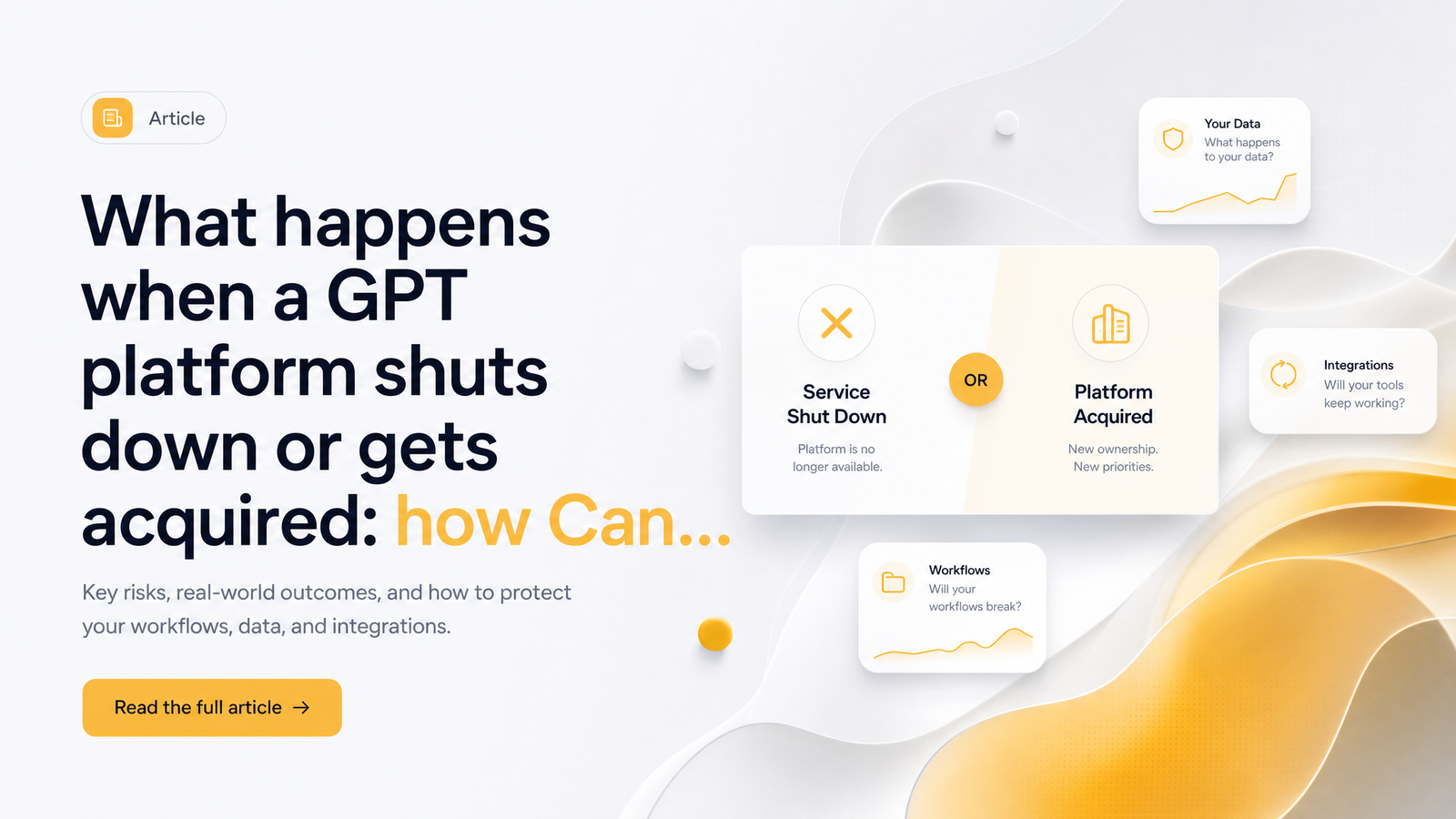
There are two scenarios to plan around. In a shutdown, the company stops operating, often with little warning, and unredeemed balances may be written off entirely or honored only for a short grace period. In an acquisition, a new owner takes over, and your balance's fate depends on what the buyer agrees to inherit — sometimes it migrates cleanly, sometimes it's discounted, and sometimes it's phased out under new rules.
Canadians earning through surveys, offers, and cashback rarely think about a GPT platform shuts down balance Canada scenario until it's already happening. But it's a predictable business risk — smaller consumer platforms close, pivot, or get absorbed by competitors regularly. Understanding what happens to GPT points if a site closes lets you treat your balance the way a smart saver treats any unsecured asset: something to convert to cash sooner rather than later.
Why Your Balance Isn't Legally Guaranteed
An unredeemed GPT balance is, in legal terms, a debt the company owes you — and if that company becomes insolvent, you become an unsecured creditor. Under Canada's Bankruptcy and Insolvency Act, unsecured creditors are paid only after secured creditors (banks, lenders with collateral) and certain preferred claims are settled. In practice, that often means little or nothing is left for consumers owed smaller amounts.
The Office of the Superintendent of Bankruptcy Canada confirms this: if you're owed money by a company that files for bankruptcy, you must file a proof of claim and wait in line with everyone else. There's no fast track for reward points or cashback balances. Hoyes Michalos' breakdown of creditor types explains why — secured creditors have collateral backing their claims, while unsecured creditors have only a contractual promise and no guarantee of recovery.
This is why a GPT platform bankruptcy in Canada is genuinely risky: your balance isn't held in trust separately from the company's operating funds. It's commingled with everything else the business owns, and a Licensed Insolvency Trustee's job is to liquidate assets fairly among all creditors — not to prioritize users who trusted the platform with their time. An unclaimed GPT balance in Canada, once a company is in formal insolvency, is functionally a line item in a filing, not money waiting for you.
Shutdown vs. Acquisition: Different Risks, Different Odds
A quiet shutdown is the higher-risk scenario. The company typically has thinning revenue, no buyer interested, and limited incentive to spend money processing a wave of final payouts. Users often get short notice — sometimes just days — before the site and its records disappear. The historical precedent is instructive: when Cybergold, one of the earliest incentive-based reward platforms, wound down, it issued a formal notice of discontinuation telling members to spend or redeem their balance by a fixed deadline or lose it. That pattern — a hard cutoff with no extensions — has repeated across the GPT industry since.
An acquisition plays out differently, though not always better. What happens to your account depends on the acquisition terms, and those are rarely public before the deal closes. Sometimes balances migrate one-to-one. Sometimes they're converted at a different rate, capped, or subjected to new minimum payout thresholds that make small balances harder to cash out. Occasionally, the acquiring company sunsets the old platform's brand while honoring existing obligations for a transition period, then folds users into its own terms entirely.
If you're asking what a GPT site acquired means for your account, the honest answer is: it depends on the buyer, and you usually only find out after the deal is done. That's why watching for warning signs beforehand is worth the five minutes it takes.
The Early Warning Signs Worth Watching For
Platforms rarely vanish without leaving a trail. Before an official announcement, a get-paid-to site closing tends to show some combination of these signals:
- Payouts that used to take a day or two suddenly take weeks, or get stuck in "processing."
- Customer support goes quiet — tickets unanswered, live chat removed, email replies templated or absent.
- The offer wall thins out noticeably, with fewer surveys, fewer advertisers, and repetitive low-value tasks.
- Social media accounts stop posting, or engagement with user complaints disappears.
- Terms of service change quietly, especially around minimum payout amounts, fees, or account inactivity rules.
- News of layoffs, leadership departures, or the parent company being "explored for sale" surfaces in industry press.
None of these alone means a shutdown is imminent. But two or three signals stacking up in the same few months is a reasonable trigger to stop accumulating balance and start withdrawing.
Your Protection Checklist: Minimize Exposure Starting Today
You don't need to predict the future to protect yourself — you just need habits that limit how much is ever at risk at once:
- Cash out often, in smaller amounts, rather than letting a large balance build toward a "someday" withdrawal. The lower your average balance, the less you ever stand to lose.
- Set a personal threshold — for example, redeem anytime your balance crosses $20 or $50 — so withdrawing becomes automatic rather than a decision you keep postponing.
- Screenshot or export your balance and payout history periodically, and keep confirmation emails for every redemption. If a dispute ever arises, this is your evidence.
- Confirm your payout method is current — an outdated PayPal email or Interac-linked phone number can turn a routine cash-out into a delay you don't have time for if a platform is winding down.
- Diversify across two or three platforms instead of concentrating all your earning activity in one place, so a single closure doesn't wipe out your entire GPT income stream.
Choosing faster payout rails also reduces how long money sits exposed between earning and cashing out. Cashsprint's payout options ranked by speed is a useful reference for which methods — Interac e-Transfer, PayPal, or gift cards — clear fastest, since a slower method held during a shutdown window can mean the difference between getting paid and filing a claim you'll likely lose.
If a Shutdown Notice Actually Arrives
Once a platform publicly announces it's closing, the priority shifts from prevention to speed. In the days and weeks after a GPT platform shuts down balance Canada announcement, take these steps in order:
- Redeem immediately, even if your balance is below what you'd normally consider worth cashing out. A small payout that clears beats a larger one that doesn't.
- Document everything — a dated screenshot of your final balance, your transaction history, and the shutdown notice itself, as your record if the payout fails or a dispute follows later.
- Watch for migration or transfer offers from an acquiring company, but read the new terms carefully before agreeing — a lower effective payout rate or a new minimum threshold can quietly reduce what you actually recover.
- Be skeptical of urgent emails claiming to be "final payout" or "account verification" requests tied to the shutdown. Scammers routinely impersonate closing platforms during exactly this window, since users are primed to click quickly. Verify any request through the platform's official, previously-used domain — never a new link sent by email.
Acting in this window is the single highest-leverage thing you can do, because once formal insolvency proceedings begin, you're no longer dealing with a company — you're dealing with a claims process.
How CashSprint Approaches This
CashSprint can't promise immunity from ordinary business risk — no GPT platform honestly can. What we can control is transparency and payout speed: keeping redemption times fast, keeping our terms visible, and giving users a clear, evidenced track record rather than vague reassurances. Our evidence-based legitimacy review lays out exactly how we've operated to date, so you can judge the platform on its history rather than its marketing.
Ready to Protect Your Earnings?
The single best protection against any of this is simple: don't let balances sit. Redeem smaller amounts on a regular schedule, keep your records, and treat every GPT balance — on any platform — as money you should convert to cash as soon as it's practical. Check our payout speed guide and legitimacy review for the specifics, then start redeeming more frequently at Cashsprint rather than banking a balance you're hoping will still be there later.
Frequently Asked Questions
Can a GPT site legally keep my points or cash balance if it shuts down?
Legally, an unredeemed balance is treated as an unsecured debt the company owes you, not money held in trust on your behalf. If the company simply closes without filing formal bankruptcy, there's often no straightforward legal process to force payment. If it files for bankruptcy, you'd need to submit a proof of claim as an unsecured creditor, and recovery is uncertain at best.
Is there a Canadian law that protects reward points the way bank deposits are insured?
No. Deposit insurance in Canada applies to funds held at member financial institutions, not to reward points, cashback balances, or GPT account credits. Your GPT balance is governed only by the platform's own terms of service and, in insolvency, by the Bankruptcy and Insolvency Act's rules for unsecured creditors — which offer no guarantee of repayment.
What should I do if a GPT platform I use gets acquired by another company?
Read the new terms of service carefully before your account migrates, since acquiring companies sometimes change payout minimums, conversion rates, or fees. It's also wise to withdraw whatever balance you can under the old terms before the transition takes effect, in case the new terms are less favorable.
How much balance is 'too much' to leave sitting in a GPT account?
There's no universal number, but a practical rule is to set a personal threshold — such as $20 or $50 — that triggers an automatic withdrawal rather than letting balance accumulate indefinitely. The lower the amount you routinely leave sitting, the less exposure you carry if the platform closes unexpectedly.
Will I get a warning before a GPT site shuts down, or does it happen suddenly?
Sometimes there's a formal notice with a redemption deadline, as happened when Cybergold announced its closure and told users to spend their balance or lose it. Other times, closures happen with very little public warning, which is why watching for earlier signals — slow payouts, vanishing support, shrinking offers — matters more than waiting for an official announcement.
Does keeping screenshots of my balance actually help if a platform disappears?
Yes — dated screenshots, exported transaction history, and payout confirmation emails serve as your evidence if you need to file a dispute, submit a creditor claim, or simply prove what you were owed. Without this record, you have little to point to once a platform's own systems go offline.