
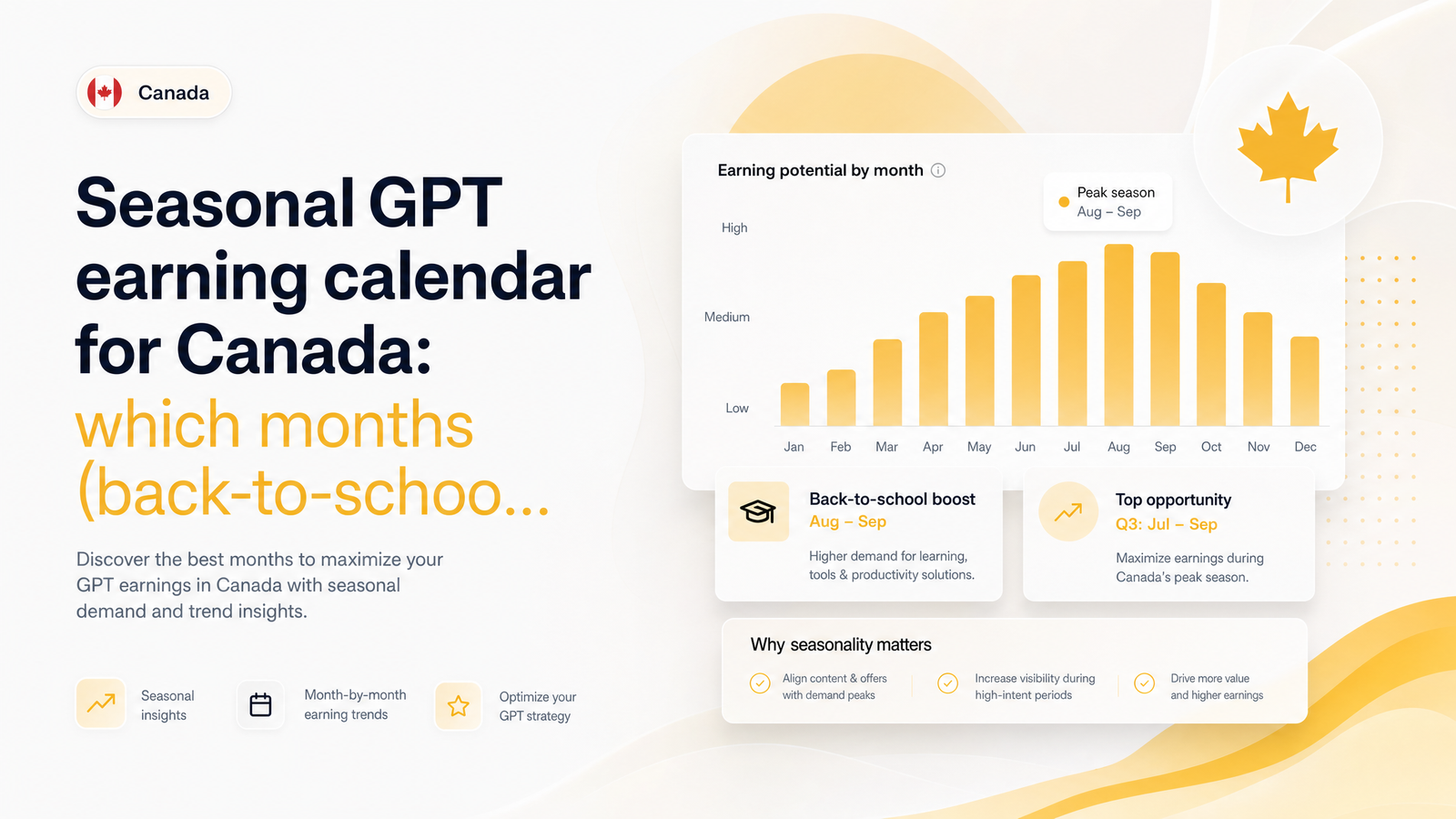
Most advice about earning through get-paid-to platforms treats every month the same, as if surveys and offers appear at a constant drip all year. They don't. If you've noticed your Cashsprint activity swelling in November and drying up in July, your account isn't broken — you're watching the Canadian retail and fiscal calendar play out in real time.
Why GPT Earning Opportunity Isn't Flat All Year
Surveys and offer walls exist because brands and market research firms pay to reach consumers like you. That demand isn't constant — it rises and falls with the same forces that drive retail marketing and financial planning across Canada. When a bank rolls out an RRSP campaign or a retailer plans its Black Friday push, someone on their marketing team commissions research to test messaging, pricing, and customer sentiment before spending the big budget. That research need shows up on GPT platforms as new surveys and offers.
The same logic applies to offer walls and cashback deals: companies pay affiliates more to drive sign-ups and purchases when their own advertising budgets are highest. So the best time of year for GPT surveys in Canada isn't random — it tracks tax deadlines, back-to-school shopping, and the holiday retail rush almost exactly. Understanding that rhythm lets you plan around it instead of guessing why some months feel better than others.
The Canadian GPT Seasonal Calendar, Month by Month
Rather than list twelve separate months, it helps to think in windows. Each one lines up with a real external driver, and each rewards a slightly different approach. This seasonal survey earning calendar for Canada breaks down into four practical stretches.
Tax Season (February–April): Financial Surveys Surge
As RRSP contribution deadlines approach and Canadians start pulling together paperwork for the CRA, banks, insurers, and fintech companies ramp up research on financial products, saving habits, and investment attitudes. This is when you'll notice more surveys about banking apps, credit cards, insurance preferences, and retirement planning — often longer and more detailed than average, but frequently better paying because financial-sector research budgets are generous during this window.
If you're weighing a tax season side hustle in Canada, this is a strong stretch to lean into GPT work specifically because RRSP-season surveys tend to cluster together, giving you a predictable supply rather than sporadic offers. Readers who want the filing-deadline specifics rather than the earning angle can check a dedicated CRA reporting resource; here, the takeaway is simpler — keep your financial and demographic profile fields current going into February so you qualify for this wave the moment it starts.
Back-to-School (Late July–September): Retail & Family Offers Pick Up
Starting in late July and building through September, back-to-school survey demand climbs as retailers, electronics brands, and clothing companies research what parents and students plan to buy. Offer walls fill with promotions tied to school supplies, tech gadgets, and apparel, while surveys ask about shopping intentions, budget constraints, and brand preferences for the upcoming school year.
Parents with school-age kids often see the most relevant, higher-paying surveys during this window since research firms specifically target that demographic. But the broader offer wall activity — retail sign-ups, app trials, cashback promotions — benefits any Cashsprint user, student or not, since the increased retail ad spending lifts offer volume across the board.
Black Friday & Holiday Season (November–December): Peak Offer & Cashback Volume
This is the single biggest spike of the year. Black Friday survey offers in Canada multiply as retailers finalize holiday campaigns and want fast consumer feedback on pricing, promotions, and product interest. Cyber Monday adds another short burst right behind it, and the momentum usually carries through December as holiday season survey bonuses and gift-buying research keep offer walls busy.
This window is also the best time to stack cashback purchases, since portals raise commission rates to match retailers' own aggressive holiday advertising spend — meaning the same purchase you'd make anyway can return more through cashback than it would in March. For a full breakdown of how payout timing works with cashback shopping specifically, it's worth reading through separately rather than duplicating that detail here; the core point for this calendar is timing your bigger purchases and survey activity to land inside November and December whenever you can.
The Quiet Stretches: Mid-Summer and January
Every calendar has valleys, and GPT earning is no exception. Mid-summer — roughly June through early July — tends to slow down because many brands pause major campaigns before the back-to-school push begins, and research budgets simply aren't being deployed at the same rate. January brings a similar dip: a well-documented January GPT offer slowdown follows the holiday spending peak, as retailers pull back after Q4 budgets are spent and before new-year campaigns ramp up.
Neither slowdown means something's wrong with your account — it reflects the same demand cycle driving the peaks. Instead of grinding through fewer available offers, use these lulls productively: update your survey profile details, refer friends to build passive earnings, and clear out lower-priority offers you've been putting off. That way you're not wasting effort chasing volume that isn't there, and you're better positioned when the next surge hits.
How to Adjust Your Strategy Each Season
Knowing when are survey sites busiest in Canada only pays off if you adjust your habits around it. A few concrete moves:
- Before February, update financial and household details in your profile so you match the incoming wave of RRSP and tax-season surveys.
- Through November, prioritize offer walls and cashback purchases over surveys alone, since that's where the holiday volume concentrates most heavily.
- In spring, expect longer, more detailed financial surveys and budget your time accordingly — they pay more but take longer to complete.
- During summer and January lulls, shift effort toward referrals, profile maintenance, and clearing smaller offers rather than expecting peak-season volume.
Thinking about the best months to earn on GPT sites this way turns a frustrating up-and-down experience into a plannable one. If you want a broader sense of what steady earning looks like across a full year, How Much Can You Earn Taking Surveys in Canada? lays out realistic expectations, while How to Maximize Your Earnings on Cashsprint walks through the tactics — offer stacking, referral bonuses, cashout timing via Interac e-Transfer, PayPal, or gift cards — that make the most of whichever season you're in.
Frequently Asked Questions
Are there really more surveys available at certain times of year in Canada?
Yes. Survey and offer volume tracks real marketing and research cycles — tax season, back-to-school shopping, and the Black Friday-to-holiday stretch all drive brands to commission more consumer research and run more promotions. These aren't coincidences; they follow the same calendar as retail ad spending and financial product marketing in Canada.
What month has the least survey and offer activity on GPT sites?
January typically sees the steepest drop-off, following the Black Friday and holiday peak once retailers pull back after spending their Q4 budgets. Mid-summer, particularly June and early July, is the other quiet stretch before back-to-school campaigns begin ramping up.
Should I save cashback shopping for Black Friday instead of throughout the year?
Black Friday and the following holiday weeks offer the highest cashback rates because retailers raise commissions to match their own aggressive advertising spend. It's smart to time larger, planned purchases for this window, but everyday cashback shopping is still worth doing year-round since ongoing offers don't disappear outside peak season.
Why do I suddenly get more financial surveys in the spring?
Banks, insurers, and fintech companies increase research spending around RRSP contribution deadlines and CRA tax-filing season, which falls between February and April. They're testing messaging and products tied to saving, investing, and filing before their spring marketing campaigns launch, which shows up as a wave of financial-focused surveys.
Does back-to-school season mean better offers for parents specifically, or everyone?
Parents and caregivers tend to see the most targeted, higher-paying surveys since research firms specifically want that demographic's shopping input. However, the broader increase in retail offer wall activity during this period benefits all users, since overall ad spending rises across the platform, not just for family-related products.
How far in advance should I update my survey profile before a peak season?
Aim to update your profile at least two to three weeks before a known peak — early January for tax season, mid-July for back-to-school, and mid-October for Black Friday and the holidays. Matching your profile details to the demographic and financial questions surveys typically ask during these windows improves how often you qualify once the volume increases.
Timing matters, but only if your account is ready to catch the wave. Set up or log back into Cashsprint now so you're positioned before the next seasonal spike hits, and bookmark this page or subscribe for seasonal offer alerts so you don't miss the shift from a quiet month into a busy one. For a wider view of how GPT earning fits into a full seasonal income plan, pair this calendar with Side Hustle Ideas 2026: What's New for Canadians This Year.